THE SECRET BEACH SHARES THREE NEW TRACKS FROM UPCOMING LP

THE SECRET BEACH SHARES “BUYING YOU A GARNET AMP”, “WHERE DID IT GO?”, AND “BLAME MANNY”, ALL FROM UPCOMING LP

WE WERE BORN HERE, WHAT’S YOUR EXCUSE?, THE NEW LP FROM THE SECRET BEACH, OUT AUGUST 23, 2024 VIA VICTORY POOL RECORDS

WATCH / SHARE “BUYING YOU A GARNET AMP” HERE
BUY / STREAM “BUYING YOU A GARNET AMP” HERE

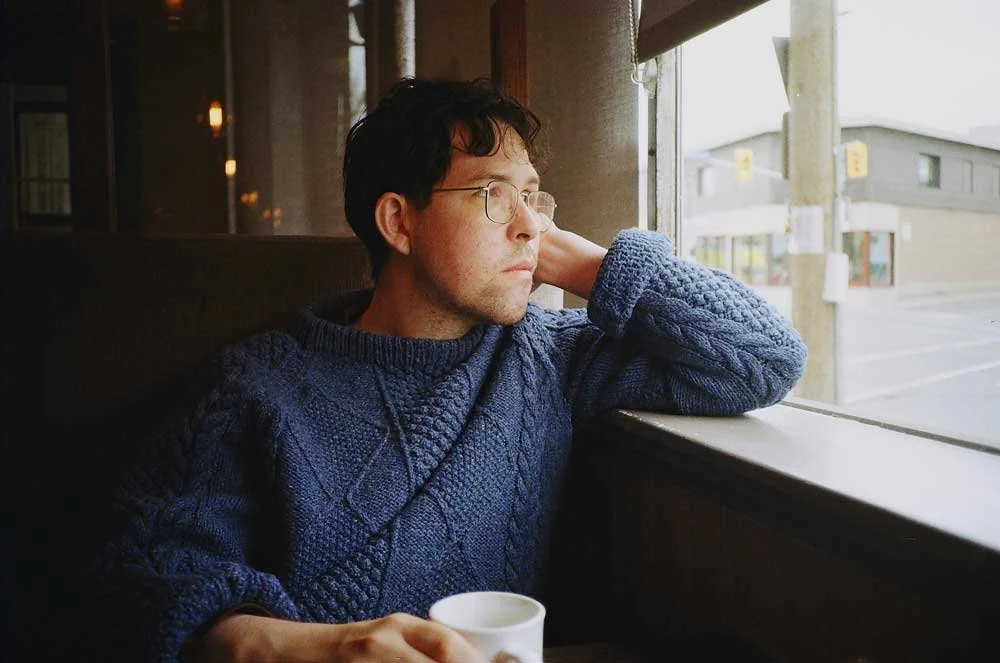
Photo Credit : Colin Medley // DOWNLOAD HIGH-RES

The Secret Beach is an ever-shifting group of musicians and co-conspirators orbiting around the songs and voice of Prairie-based songwriter Micah Erenberg. The band moniker – in the same vein as classic groups Guided By Voices, The Byrds, and Tame Impala – helpfully points out that a songwriter is not an island (or indeed, a beach) unto themselves, and the contributions from the involved parties go a long way in making this project what it is. 

Today, Erenberg is sharing three new songs from the upcoming album. “Buying You A Garnet Amp” follows the storyteller’s journey on their search to find the illustrious Garnet Revolution II guitar amplifier as a gift for their significant other. The amp is a particularly sought after model that was a favourite of many including the late Dallas Good of the Sadies.

The story is the single-most defining activity of a Winnipeg musician: buying a renown Winnipeg-made Garnet Amplifier on Canada’s favourite buy-and-sell website, Kijiji. In the 1960s Winnipeg-made Garnet amps took on worldwide acclaim when they were popularized by artists like The Guess Who. They became known as indestructible amps and the company was even later commissioned to make amps for esteemed companies such as Gibson and Fender. Today they are sought after by musicians and recording studios around the globe, however the best place to find them is always a Winnipeg Kijiji search.

The single is accompanied by a video by Dog Days Film Co. which follows the same storyline as the song.

WATCH / SHARE “BUYING YOU A GARNET AMP” HERE
BUY / STREAM “BUYING YOU A GARNET AMP” HERE

“Buying You A Garnet Amp” Artwork // DOWNLOAD HIGH-RES

“Where Did It Go?” is the first Secret Beach song to feature a new lead vocalist. The song was written and performed by Daniel Diamond, who also plays drums and acoustic guitar on the track. Daniel and Erenberg are lifelong friends and frequent collaborators. The cover photo above is a picture of them doing art as kids, not too dissimilar to the hangs they get in these days. The song follows an aching soul, searching for lost purpose. The story is surrounded by swirling, Wilco-esque guitarmonies and is absolutely baked in near-campfire levels of homegrown goodness.

 BUY / STREAM “WHERE DID IT GO?” HERE

“Blame Manny” is a classic bedroom style recording about a person who mistakenly gets identified as the culprit in a convenience store robbery. Later, the accused comes face to face with the actual robber and a legendary episode of fisticuffs ensues.

BUY / STREAM “BLAME MANNY” HERE

The songs were recorded on three different tape mediums; a Tascam 38, a Fostex B-16 and a Tascam 388, respectively. Each one was recorded in a different space and with their own unique approach to production. 

MORE ABOUT WE WERE BORN HERE, WHAT’S YOUR EXCUSE?
The new LP, We Were Born Here, What's Your Excuse?, is unquestionably a musical delight (more on that later), but it's also a subtle nod to the oft-overlooked Canadian province of Manitoba, lazily known to many as either a landlocked frozen tundra or the butt of a joke on The Simpsons (season 16, episode 6), where a welcome to Winnipeg sign reads 'NOW ENTERING WINNIPEG. WE WERE BORN HERE, WHAT’S YOUR EXCUSE?'" 

Musically, one of Erenberg's primary inspirations for this record was the classic Bob Dylan & The Band album Planet Waves. The casual, homespun vibe of that LP had long held a special appeal for the songwriter, and after deep-diving on some of the album's finer details, Erenberg discovered that Planet Waves' producer, Rob Fraboni (also known for his work with the Rolling Stones, The Beach Boys, and Tim Hardin, to name but a few) was still active and, as it turned out, still open to working with new projects. After a few phone calls, it was decided that Erenberg would travel to the veteran producer's studio of choice in Connecticut where the two spent five days marinating in the songs. Fraboni offered his enthusiastic perspective on the tunes, shared some of his well-honed musical philosophies, and a friendship was quickly cultivated. The songwriter stuck this experience in his back pocket and used it as fuel to write a few more songs and complete the final mix of the album.

We Were Born Here, What's Your Excuse? is an album teeming with warmth; its 17 tracks casually unfurl spools of intimate texture, hushed melodies, and a wholly inviting atmosphere that puts the listener virtually in the same room as these timeless tracks. The songs – many of them barely cracking the two-minute mark – fly effortlessly by, nodding to many major players in the pop music canon. The spectre of Elliott Smith hovers over many corners of the record, including opener “Beautiful Everything” as well as the achingly tender one-two punch of “Long Distance Gossip” and “Natural Metaphor”. And indeed, whiffs of Dylan and The Band appear throughout, with the latter uniquely evoked in the album's organic, live-band feel, and the former's lyrical mastery mirrored throughout. More contemporary touchstones like Brooklyn indie-folk auteurs Woods and M. Ward (“Where Did It Go?”) are also apparent, and early '00s heroes Grandaddy are called to mind on “LA Haircut”, a cleverly sardonic critique of misplaced ambition.

WATCH / SHARE “22” HERE
BUY / STREAM “22” HERE

While Erenberg played a whole pile of instruments on the album himself, The Secret Beach wouldn't be what it is without the help of the carefully selected crew of fellow travellers tastefully deployed throughout the album. We're talking about the sort of players whose first priority is to shine a light on this collection of songs, seeming almost invisible in the apt-ness of their contributions; but repeat listens will have the listener revelling in the finer details, which include vocals and pedal steel from acclaimed country duo Kacy & Clayton, keys and guitar courtesy of Liam Duncan (aka Boy Golden), and duel backing vocals from Duncan and frequent bandmate Fontine. Erenberg captured the album on a variety of classic vintage tape machines, burnishing the album with a sepia-toned analog patina that makes it sound as if it could have been made any time in the last five decades. And while the spirit of Planet Waves looms large, one would be forgiven for hearing hues of early McCartney solo albums, Big Star's Third, and fellow Canadian DIY legend Chad VanGaalen.

WE WERE BORN HERE, WHAT’S YOUR EXCUSE?
01 Beautiful Everything
02 Sunspill
03 Buying You A Garnet Amp
04 22
05 All This Living
06 Have You Seen The News?
07 If You Don't Love Me, Let Me Go
08 Blame Manny
09 Sucked Into It
10 L.A. Haircut
11 Long Distance Gossip
12 Not So Bad
13 Natural Metaphor
14 Where Did It Go?
15 Hat's Way of Walking

THE SECRET BEACH ONLINE
WEBSITE
INSTAGRAM
BANDCAMP

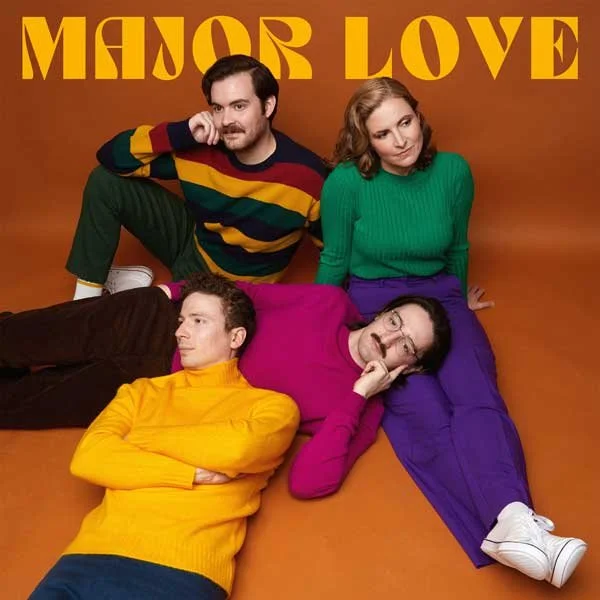
MAJOR LOVE REVEAL NEW SINGLE “TIME” FROM UPCOMING LP

WATCH / SHARE “TIME” HERE
BUY / STREAM “TIME” HERE

LIVE, LAUGH, MAJOR LOVE OUT MAY 17, 2024 VIA SLOW WEATHER

PRE-SAVE LIVE, LAUGH, MAJOR LOVE  HERE

TOUR DATES BEGIN MAY 16 - FULL DATES LISTED BELOW


Major Love — the collaborative project between Edmonton songwriter and multi-instrumentalist Colleen Brown and Scenic Route to Alaska — are following up their 2018 debut this May, excavating the painful reverberations of pandemic isolation with latest single "Making the Most of It." Produced by Marcus Paquin, the upcoming record promises catharsis and introspection like only Brown and co. can provide.” Exclaim! | Most Anticipated Albums of 2024

Photo Credit : Ryan Parker // DOWNLOAD HIGH-RES

The new track from Major Love, “Time”, from their upcoming album, Live, Laugh, Major Love, “reflects on the passing of youth, the loss of years in lockdown, the looming reality of death, and even the sort of comforting promise of its inevitable arrival for each of us,” says songwriter Colleen Brown

Brown and the band; Trevor Mann on guitar and vocals, Shea Connor on drums and vocals, and Murray Wood on bass (who also make up the trio Scenic Route To Alaska) recorded the single literally in time - to sync up with the ticking of the clock’s second hand. “We took pains to create space, and not to fill every nook and cranny with sound,” explains Brown. “I love how Trevor’s guitar mimics the lead vocal, but they never totally align. They feel like otherworldly echoes to me in some Chris Isaak musical universe.” 

The song arrives with visuals from Dale Bailey (Shoulda Danished), a mesmerizing slow motion synthesis of stark landscapes and light interplay, with fragile bubbles suspended, that bring to mind longform, realtime video like the Fireplace channel.

WATCH / SHARE “TIME” HERE
BUY / STREAM “TIME” HERE

Single Art // DOWNLOAD HIGH-RES

MORE ABOUT LIVE, LAUGH, MAJOR LOVE
Live, Laugh, Major Love, the long-awaited, Marcus Paquin-produced, semi-eponymous sophomore album from Major Love, comes to us like a cheeky valentine, pairing emotional vulnerability with light-heartedness and the kind of confidence that is synonymous with rock. Earnest without taking themselves too seriously on this record, Major Love’s lead singer-songwriter Colleen Brown playfully scorns romantic love even as she openly longs for it. 

“When love relationships go bad, there’s always some part of you that recoils at the next opportunity. You’re like the armadillo. You’re always wearing your armour. And then you attract more armadillos, both of you protecting yourselves, both of you only showing a small part of your tender self. All the while, wishing, at least in part, to relieve yourselves of your shells. To be naked in your need,” says Brown. “The older I get, the more plainly obvious it is to me that in order to survive, we need to learn to love each other, forgive each other, be emotionally vulnerable with one another, look for ways we can collaborate and compromise, and become totally and utterly truthful with ourselves and each other.” 

The eleven tracks that comprise Live, Laugh, Major Love showcase Brown’s willingness to do just that, in partnership with her Major Love bandmates: Trevor Mann, Shea Connor, and Murray Wood.

WATCH / SHARE “MOUNTAIN STANDARD TIME” HERE
BUY / STREAM “MOUNTAIN STANDARD TIME” HERE

This latest offering, Live, Laugh, Major Love, began with the creation of these two demos; “The More I Know” and “Mountain Standard Time” and became the starting point for the whole record after a serendipitous meeting with Grammy Award-winning producer Marcus Paquin, who would go on to complete the album with the band. “I met Marcus in early 2020, when the two of us were backing up Hawksley Workman and Sarah Slean on tour. I showed him a bunch of my music. He played me the new Weather Station album he had just completed and I was really blown away, obviously, so I really wanted to work together…and we hatched plans to complete the rest of [Major Love’s] album at the National Music Centre in Calgary.” 

There were some worldly delays to getting started on that - during which time Brown released two solo albums - Isolation Songs in 2020 and Winging It in 2022 - the latter of which features Paquin as mixing engineer on the track “I Am Leaving (And It's Okay)”

WATCH / SHARE “ONE WOMAN” HERE
BUY / STREAM “ONE WOMAN” HERE

The band finally convened in May 2022 to record Live, Laugh, Major Love, titled in homage to the very cheesy home decor of the rental house they stayed at while recording in Calgary, and in a nod to Brown’s self-help journey that colours a lot of the songwriting. “I'm kind of poking fun at myself while also earnestly repeating my daily affirmations… That's the thread that ties all the songs together - it's me wrestling with my shadows, succumbing at times, trying to pull myself back into the light.’ 

By the time we hear the album’s closing track “Better Excuse” we do feel as though we are once again in the light. Brown brings us back, full circle, to her romantic optimism, but this time holding on to all the lessons gleaned from the preceding tracks, as she sings about living the life she wants without waiting for love, while also putting forth the offering: “I’ll make the time, I’ve always got space for two.”

WATCH / SHARE “MAKING THE MOST OF IT” LYRIC VIDEO HERE
BUY / STREAM “MAKING THE MOST OF IT” HERE

PRE-SAVE LIVE, LAUGH, MAJOR LOVE HERE

TOUR DATES
May 16 - Edmonton, AB, Varscona Theatre
May 17 - Calgary, AB, King Eddy
May 18 - Lethbridge, AB, The Owl
May 19 - Red Deer, AB, Bo’s
May 21 - Penticton, BC, Dream Cafe
May 23 - Vancouver, BC, The Lido
May 24 - Victoria, BC,  The Hallway
Jun 9 - Ottawa, ON, Live on Elgin
Jun 10 - Toronto, ON, Horseshoe Tavern
Jun 26 - Golden, BC, Kicking Horse Culture

DOWNLOAD HIGH-RES

LIVE, LAUGH, MAJOR LOVE TRACKLIST
01 For The Long Run
02 Making The Most Of It
03 Same Girl
04 One Woman
05 The More I Know
06 Mountain Standard Time
07 Keep Your Heart To Yourself
08 Mind Body
09 Mistake Again
10 Time
11 Better Excuse

MAJOR LOVE ONLINE
FACEBOOK
TWITTER
INSTAGRAM

LUKA KUPLOWSKY & THE RYŌKAN BAND ANNOUNCE NEW DOUBLE LP, SHARE FIRST SINGLE / VIDEO

LUKA KUPLOWSKY & THE RYŌKAN BAND REVEAL NEW DOUBLE LP, HOW CAN I POSSIBLY SLEEP WHEN THERE IS MUSIC, OUT MAY 31, 2024 VIA NEXT DOOR RECORDS

WATCH / SHARE “HOW CAN I POSSIBLY SLEEP WHEN THERE IS MUSIC”
BUY / STREAM “HOW CAN I POSSIBLY SLEEP WHEN THERE IS MUSIC”

PRE-SAVE HOW CAN I POSSIBLY SLEEP WHEN THERE IS MUSIC


Photo Credit:  Melissa Richards // DOWNLOAD HIGH-RES

Today, Luka Kuplowsky announces his new album, How Can I Possibly Sleep When There Is Music, and is sharing the title track from the double LP. The record begins with a deceptively simple exchange: the call and response of an artless whistle and the thud of a wood-block. As if a herald to the band, these two sounds precipitate a kaleidoscope of swirling movement and the intoxicating sounds of spiritual jazz, folk and blues that carve out the sonic terrain. Conceived as a record of adaptations and responses “to a millennia of poetry”, the album draws together the poems of Ryōkan Taigu, Bohdan Ihor Antonych, Rainer Maria Rilke, Yosana Akiko, Du Fu, Jalāl ad-Dīn Muhammad Rūmī, W.W.E Ross, Li Bai, and La Fontaine, placing them within a dynamic environment of ecstatic and imaginative expression. Think Bill Callahan meets Don Cherry’s Organic Music Society, an ECM produced Leonard Cohen record, or Lou Reed fronting the Astral Weeks band, and you get a sense of the record’s unique terrain.

The first single, “How Can I Possibly Sleep When There is Music (a response to Ryōkan Taigu)”, which features vocalist Felicity Williams and flutist Anh Phoung, reflects on Ryōkan Taigu 良寛大愚, a Soto Zen Buddhist monk. Quiet, spirited, generous. A hermit whose masterful poetry and calligraphy was an extension of his deep love of nature and playful attitude towards life. Stirred by Ryōkan’s poem and its restless, joyful sentiment, the song carries forth as a response and conversation across centuries.

Kuplowsky adds, “Felicity overtaking the vocal melody at the end and reacting to Anh’s flute sets up a framework for the album; a trading forth and conversation between voices and sounds. How special to be in a world so animated by a curiosity and love of sound. And to dance and move to it! How can one even sleep!”

The song arrives with a video directed and edited by Kuplowsky. “With every blurred hazy cellphone moon we confront technology's failure to render the moon’s beauty,” he explains. “Even Ryōkan, a half century before the camera, likely felt how poetry fails in this pursuit as well. Perhaps the moon’s allure is not visual or speakable at all? Perhaps it registers in the soul…as music! Who knows! This video accepts that failure, playfully superimposing dancing celestial bodies captured with my camera and setting them against the expressive rush of a repurposed 16mm collage of fabric paint, cut-up film negative, stenciled marker and scratching. It’s a video that suddenly arose and came together quite serendipitously.

“The collage was made collaboratively with Noncedo Khumalo, Franci Duran, Yu Zheng, Deirdre Logue, Terry Jones, Becky Yip, Omid Shakiba, Scott Lalonde and myself for Phillip Hoffman and Franci Duran’s Process Cinema course. My dearest Mo drew the handwritten title cards.”


WATCH / SHARE “HOW CAN I POSSIBLY SLEEP WHEN THERE IS MUSIC”
BUY / STREAM “HOW CAN I POSSIBLY SLEEP WHEN THERE IS MUSIC”


Album Poster

MORE ABOUT HOW CAN I POSSIBLY SLEEP WHEN THERE IS MUSIC
The accompanying poster to the album lays out the record’s lyrical and musical inspirations in a Pirosmani-like tableau beautifully rendered by his brother Adam Kuplowsky, picturing Luka at his desk surrounded by a plethora of books, vinyls, tapes and objects: on one side, records by blues and folk artists, Elizabeth Cotton and Howlin’ Wolf, are strewn beside Tang Dynasty poets Du Fu and Li Bai; on the other side, records by contemporary peers like Yves Jarvis and Bernice sit next to a book of the 18th century Zen monk poet Taigu Ryōkan. Directly in front of Kuplowsky, and next to a half-eaten donut and coffee, lies the heart of the record, a cassette tape of the Canadian songwriter Beverley Glenn-Copeland’s 1986 cult-classic Keyboard Fantasies. Copeland’s presence is central to the record, as it was a poignant meeting with him in 2017 that thrust Kuplowsky into the web of connections between Buddhist thought, jazz/blues/folk traditions, and an array of poets spanning across two millennia. Describing his meeting with Glenn, Kuplowsky recalls:

“Glenn had come out to a show I was playing at Thunder and Lightning, a small tavern in Sackville, New Brunswick. Having discovered his record Keyboard Fantasies a year before, I was in awe. After the show, he greeted the band, seriously and sincerely reviewing each of our playing and recognizing the ways we interacted as a band. The next day before we were leaving town, Glenn invited my bandmate, Bianca Palmer and I to his studio. Over a couple hours, we shared stories, works in progress, and at one point, improvised freely – myself at the keyboard, Bianca on a ‘spirited’ drum machine and Glenn singing. During our conversation, Glenn talked about his Buddhist practice and creativity, often returning to the idea that ‘humans are both creators and conduits of eternal creative energies’ beamed in from the Universal Broadcasting System. I started to recognize how the playfulness, calmness and incredible patience of his personality, music and spiritual practice were all one. I left that day - floating.

“Arriving home after the tour, I found myself re-dedicated to my local library. After Glenn’s conversation, my interests turned towards Buddhism and poetry that reminded me of Glenn’s spirituality and playfulness.” 

Kuplowsky’s spark quickly illuminated a vast array of connections, expanding from the Buddhist poetry of Ryokan Taigu, to the Tang dynasty poets Du Fu and Li Bai, the melancholic orphic refrains of Rainer Maria Rilke, the impressionistic and elemental Bohdan Ihor Antonych and the ecstatic joy of Jalāl ad-Dīn Mohammad Rūmī, among others. As a means to make sense of what he was reading, Kuplowsky turned to song, responding, interpreting and adapting poems that called out to him:

“Poetry and music became an inseparable practice. I would read for hours, and when a song called out, I would play. Some poems felt so comfortable as songs; not a word was out of place when I began to sing. Others began to naturally extend themselves to other songs I had been writing, blurring and unraveling into their own worlds. My aim was not to faithfully reflect the original intention of the poems, but to respond to them as they struck me. In this way, my poetic adaptations are better understood as responses or interpretations, following language and bending or modifying it to meet me in the moment of its resonance.”

Across the album’s twenty-four tracks, Kuplowsky filters his thoughts through the poetic language of his muses, expounding on the delight of music, the unexpected joy of a visitor, instructions for meditation, and the wonder of the natural world’s creative energies. The language is at once unadorned and conversational, while also strikingly beautiful and poetic. The effect is not unlike the child-like sublimity of Jonathan Richman in its direct and refreshing clarity. In Ryōkan’s “What Luck!”, the startling, yet humble discovery of a “coin in his bag” leads to an inebriated reunion with his friend Sleeping Dragon. In “Self Portrait”, Kuplowsky via Antonych sings in awe of the “incomprehensible beauty of creation”, aptly titling himself “a poet on the high of spring”. In the melancholic rendering of Ross’ “If Birds are Silent”, the absence of bird song is yearned to “echo with the dawn” and “be repeated each early day”. In the title track Kuplowsky responds to a Ryōkan poem with the utter conviction of music and dance’s powerful nocturnal allure, “How can I possibly sleep when there is music and dancing / I love dancing too!” Throughout the various poetic guises Kuplowsky adopts there remains a passion to engage with the unknown, an intoxication in the natural world’s awesome wonder and an innocent delight in simple pleasures.

Following 2020’s Stardust, a rich otherworldly album of pop and jazz romanticism, How Can I Possibly Sleep When There Is Music extends Kuplowsky’s interest with improvisational structures and live recording, as its seven-piece band crafts a singular sound of spaciousness, experimentation and unbridled expressiveness. This is music where every instrument is a character and every character is in conversation with each other: the acrobatic vocals of Felicity Williams ricochet off the unbridled virtuosity of Anh Phung’s flute and Kuplowsky’s warm, rich tenor; the dual percussionists, Evan Cartwright and Phil Melanson, interweave rhythmic counterpoint through an arsenal of beguiling sounds; Josh Cole’s deep pocket bass locks into Kuplowsky’s spidery nylon string guitar, occasionally blossoming into playful figures and brilliant somersaults; Alex Lukashevsky’s electric guitar oscillates between sensitive counterpoint, percussive wah-wah and blistering noise. Like Stardust, the album was recorded entirely live with little isolation between the seven member band, a testament to the deep listening and musical trust so central to Kuplowsky’s vision and the players he collaborates with. The three day session for tracking was led by the luminary Toronto producer/songwriter Sandro Perri, whose gentle presence and sensitivity in guiding the session and mixing the album imbues the proceedings with his ingenuity for sonic adventurism and organic warmth.

Kuplowsky dubs the group The Ryōkan Band; a nod to the improvisational playfulness central to Ryōkan’s outlook, as well as a tribute to his poetry’s influence in informing the responsive songwriting practice that inspired the album. As a band they achieve an exceptional group sound, one that is rooted in traditions of jazz, blues and folk, not as a genre exercise or pastiche, but as a means to express individual and recombinant personalities. While songwriter traditions so often attribute the voice as a song’s anchor of meaning, one might consider listening to this record with the flute, guitar, percussion, or bass as equally integral narrators of the songs. To think of the band as accompanists is to misconstrue the record’s aim; this is collaborative music in its richest sense. Signaling this approach, the record is structured with percussive interludes, titled poetically to reflect their emotional tenor or subject. These brief textural moments, absent of lyrics but rich with meaning, draw attention to the way in which the album’s mode of poetic adaptation extends far beyond the lyrics, musically embellishing animated environments to interact and broaden the poetry's scope. In “Mid Summer” the buzzing drone of harmonicas, flutes, vocals and guitars conjures a humid summer day teaming with insects, before Kuplowsky begins to recite a Ryōkan poem about a chance meeting with a friend by the waterside. In “Don’t Be Jealous of the Ocean’s Generosity”, Anh Phung’s flute and Felicity Williams vocals trade off cascading lines mirroring the ‘jumping fish’ of the song’s refrain. In “The Frog That Wants to Make Itself As Big As An Ox”, Josh Cole’s bass bellows like a croaking amphibian, while Anh Phung’s atonal flute flourishes resemble the rapidly inflating ego and body of the titular frog.

PRE-SAVE HOW CAN I POSSIBLY SLEEP WHEN THERE IS MUSIC

For Kuplowsky and The Ryōkan Band adaptation is not a process of placing poetry over music, but rather an active and responsive process of interpreting and realizing the poem in an instance of music. The album is a rare occasion; a merger. Ancient and distant poet masters alive in the compositions of a masterful songwriter and brilliant improvisers. It is a translation after the translation, sensitively rendered in tribute and participation. These are songs that will echo into the future as the poems herein have leapt to us from the far past. Like Du Fu’s letter to “Pi Ssu Yao”, “we can console each other / at least we will have descendants”. Poets and musicians embrace and stroll, hand in hand.

Returning to the central question of how this record came to be, Kuplowsky concludes:
“There was no grand conceit in bringing together poems by Ryōkan Taigu, Bohdan Ihor Antonych, Rainer Maria Rilke, Yosana Akiko, Du Fu, Jalāl al-Dīn Muhammad Rūmī, W.W.E Ross, Li Bai, and La Fontaine. They were poems I came across that resonated and opened themselves up to song. It is in this shared resonance that a connection is forged. These are poems that reached me; they mirrored back thoughts of my own writing, while challenging or opening up new pathways and ways of thinking. In hindsight, the poets in this collection were fringe or cultish figures in their time, challenging the poetic tradition of their contemporaries. In their works, they share a recognition of creativity as an unknowable and spiritual force (Glenn’s Universal Broadcasting System), while also focusing on intimate relationships of friends and lovers. While it is partially informed by translation style, the poems that I was drawn to were cutting and direct, often using conversational, unadorned language. They carry an imperative that is powerful, sincere and beautiful.

There is a context to these poems that is equally important to their understanding. But this album is an acknowledgement of the recurring universality of their sentiments. If a song resonates with you, let that be a light towards their poetry and histories.”

DOWNLOAD HIGH-RES

HOW CAN I POSSIBLY SLEEP WHEN THERE IS MUSIC

01 Elixir Of Immortality
02 To Pi Ssu Yao (Du Fu)
03 How Can I Possibly Sleep When There Is Music (a response to Ryōkan Taigu)
04 Generous Fool
05 Formal Meditation (Ryōkan Taigu)
06 The Rain Has Not Yet Cleared
07 Self-Portrait (Bohdan Ihor Antonych)
08 Don’t Be Jealous! (a response to Jalāl al-Dīn Muhammad Rūmī)
09 Thoughts In Exile
10 If Your Heart Remains Unchanged (Ryōkan Taigu)
11 I Knew it Would Be You! (Ryōkan Taigu)
12 I Pass the Evening Slowly
13 4 Poems (Yosano Akiko)
14 Dreaming of Li Bai (Du Fu)
15 Thoughts While Travelling
16 Ars Poetica 2 (Bohdan Ihor Antonych)
17 The Frog that Wants to Make Itself as Big as an Ox (Jean De La Fontaine)
18 Mid Summer (Ryōka)
19. If Birds are Silent (W.W.E Ross)
20. What Luck! (Ryōkan Taigu)
21. You Made Me Sing! (a response to Jalāl al-Dīn Muhammad Rūmī)
22. Elixir of Immortality, Pt. 2
23. Wasting (Li Bai)
24. Fugitive Song (a response to Rainer Maria Rilke)

LUKA KUPLOWSKY ONLINE
WEBSITE
BANDCAMP
FACEBOOK
INSTAGRAM
TWITTER
YOUTUBE